

Justice on the Tracks
Subscribe Now!How Sidney earned its reputation as Nebraska’s toughest frontier town in the fall of 1875
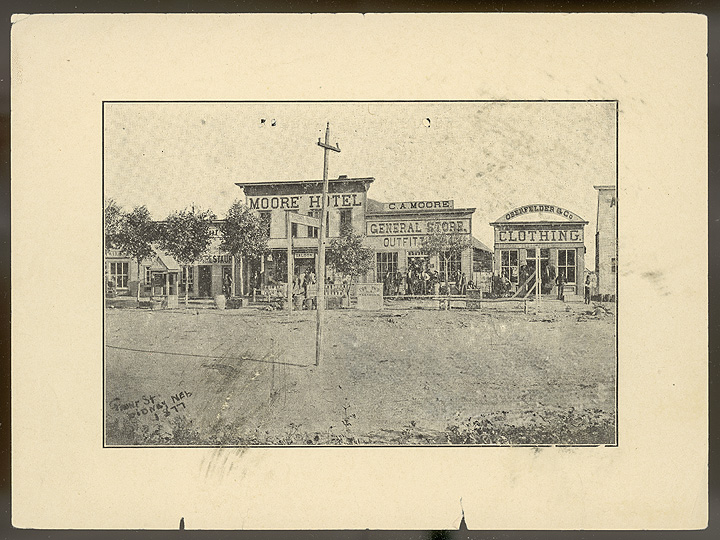
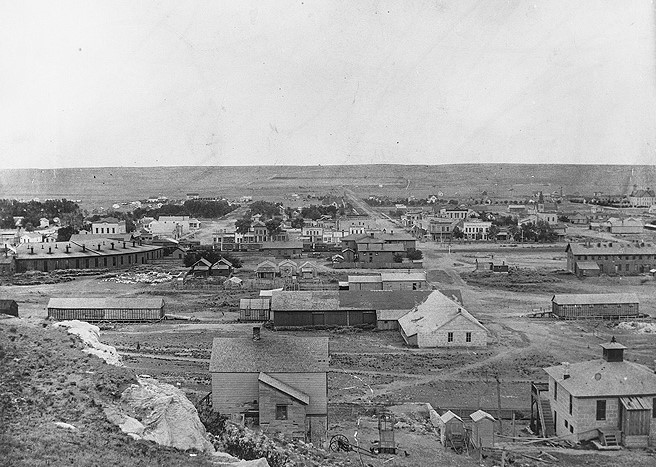
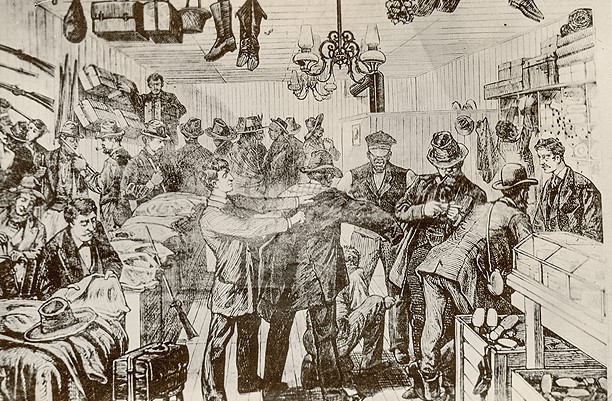
On Oct. 28, 1875, the frontier town of Sidney – perched on the far western edge of Nebraska – erupted in violence that laid bare the raw justice of the Old West. Newspapers of the day recorded the events, which began as a quarrel among three locals and ended in a double lynching that cemented Sidney’s fearsome reputation on the Union Pacific line.
The Sidney Telegraph reported that a dispute between Chuck Patterson, his friend Joe Reed, and livery owner Robert W. Porter turned deadly when Patterson drew his revolver. Three quick shots left Porter dead in the street.
Sheriff John Ellis quickly arrested Patterson and locked him in the town’s jail, a rickety structure nicknamed the “Chicken Coop.” Prisoners from the Coop were put to work digging Porter’s grave at Boot Hill, Sidney’s rough frontier cemetery.
Porter’s death rattled the town. A respected businessman, he operated the local livery stable and advertised regularly in the Telegraph, selling feed and tack to locals and travelers alike. By the next day, about 40 of his friends and customers had gathered at the Capitol Saloon, owned by Cornelius “Con” McCarty. Fueled by drink and anger, the men railed against a legal system they believed to be corrupt – Judge D. Carrigan, who presided locally, was a close friend of McCarty’s.
With Sheriff Ellis out of town, only a single jailer stood between the mob and Patterson. The men promised him safe passage if he yielded. He stepped aside. The mob hauled Patterson to a telegraph pole near the Union Pacific tracks and hanged him. McCarty then raised a toast: “Free drinks for a job well done!”
Their triumph was short-lived. Sheriff Ellis rode back into town to find Patterson still dangling from the pole – alive. Ellis cut him down and carried him back to the Coop. Against the odds, Patterson recovered.
Unaware, the mob drank late into the night. When passing cowboys asked about the revelry, they were told of the hanging. The strangers shook their heads – there was no body on any telegraph pole. Alarmed, the mob charged back to the jail.
This time, Ellis resisted. Outnumbered, he was beaten bloody before surrendering his prisoner. Patterson was dragged once more to the pole, and the mob made sure the job was finished. His body hung for several days, a grim sight for passengers rolling through on the Union Pacific.
Sheriff Ellis, broken in body and spirit, soon left town and never returned. His replacement: Con McCarty, saloonkeeper and ringleader of the lynch mob. On Oct. 31, Patterson’s body was finally cut down and buried at Boot Hill by fellow prisoners.
The episode earned Sidney its reputation as the “Lynching Capital of Nebraska.” With its mix of soldiers from nearby Fort Sidney, railroad workers, outlaws, and a thin scattering of respectable citizens, law and order often bowed to fear and force. Irish-born figures such as McCarty and Judge Carrigan dominated the town’s rough political life.
The violence lingered in memory. Years later, in an interview reprinted from the Omaha Bee, merchant Robert O. Oberfelder recalled finding the body of Chuck Reed – Joe Reed’s brother – swinging from another telegraph pole. When he asked what happened, townspeople advised him to mind his own business.
Such was Sidney in its heyday – a frontier town where law and order often yielded to mob rule, and survival could hang by the thinnest of threads.
About the Author
Loren Avey is a Sidney historian and author of Lynchings, Legends & Lawlessness: The Story of Historical Sidney, Nebraska. His work, rooted in period newspapers and local lore, preserves the frontier tales that gave Sidney its reputation as “the toughest town on the tracks.”



The information below is required for social login
Sign In
Create New Account